Naga Raksha Mask (Cobra Demon Mask) The Naga Raksha Mask is one of the most famous traditional Sri Lankan masks, representing the mythical cobra demon. It is handcrafted from light wood (usually Kaduru wood), skillfully carved and brightly painted by local artisans. The mask features striking cobra hoods rising above the head, symbolizing power, protection, and spiritual strength. Traditionally, these masks are used in Sri Lankan dance rituals, folk dramas, and cultural performances to ward off evil spirits and bring good fortune. Today, Naga Raksha Masks are also popular as decorative art pieces and souvenirs, showcasing Sri Lanka’s rich cultural heritage. Material: Kaduru wood (lightweight & eco-friendly) Origin: Handmade in Sri Lanka Use: Cultural performances, home décor, souvenirs, gifts
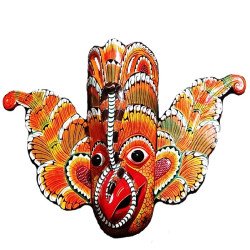
Gurulu Raksha Mask (Mythical Bird Demon Mask) The Gurulu Raksha Mask is a traditional Sri Lankan mask that depicts the mythical bird demon “Gurulu,” believed to have the power to drive away evil spirits. It is beautifully hand-carved from light Kaduru wood and painted in vivid colors, featuring large wings, a fierce beak, and intricate decorative patterns. In Sri Lankan culture, the Gurulu Raksha Mask symbolizes protection, strength, and spiritual guardianship. It is often used in folk rituals, dance performances, and healing ceremonies. Today, it is also cherished as a unique cultural art piece and a striking home décor item. Material: Kaduru wood (lightweight & eco-friendly) Origin: Handmade by Sri Lankan artisans Use: Rituals, cultural performances, home décor, souvenirs
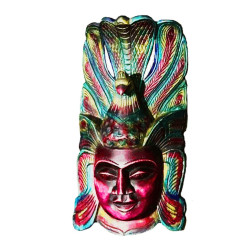
Naga Kanya Mask (Serpent Maiden Mask) The Naga Kanya Mask represents the mystical half-woman, half-serpent figure in Sri Lankan and South Asian mythology. “Naga” means serpent, and “Kanya” means maiden, symbolizing wisdom, fertility, and protection. The mask is traditionally hand-carved from Kaduru wood and painted in vibrant colors, featuring a graceful female face crowned with multiple cobra hoods. In Sri Lankan tradition, the Naga Kanya is considered a guardian spirit who brings prosperity, protection from misfortune, and blessings of good health. Today, these masks are treasured as cultural collectibles, used in rituals, and admired as decorative art pieces that highlight the island’s rich heritage. Material: Kaduru wood (lightweight & eco-friendly) Origin: Handmade in Sri Lanka Use: Rituals, spiritual protection, cultural performances, home décor
Naga Kanya Mask (Serpent Maiden Mask) The Naga Kanya Mask represents the mystical half-woman, half-serpent figure in Sri Lankan and South Asian mythology. “Naga” means serpent, and “Kanya” means maiden, symbolizing wisdom, fertility, and protection. The mask is traditionally hand-carved from Kaduru wood and painted in vibrant colors, featuring a graceful female face crowned with multiple cobra hoods. In Sri Lankan tradition, the Naga Kanya is considered a guardian spirit who brings prosperity, protection from misfortune, and blessings of good health. Today, these masks are treasured as cultural collectibles, used in rituals, and admired as decorative art pieces that highlight the island’s rich heritage. Material: Kaduru wood (lightweight & eco-friendly) Origin: Handmade in Sri Lanka Use: Rituals, spiritual protection, cultural performances, home décor
Naga Kanya Mask (Serpent Maiden Mask) The Naga Kanya Mask represents the mystical half-woman, half-serpent figure in Sri Lankan and South Asian mythology. “Naga” means serpent, and “Kanya” means maiden, symbolizing wisdom, fertility, and protection. The mask is traditionally hand-carved from Kaduru wood and painted in vibrant colors, featuring a graceful female face crowned with multiple cobra hoods. In Sri Lankan tradition, the Naga Kanya is considered a guardian spirit who brings prosperity, protection from misfortune, and blessings of good health. Today, these masks are treasured as cultural collectibles, used in rituals, and admired as decorative art pieces that highlight the island’s rich heritage. Material: Kaduru wood (lightweight & eco-friendly) Origin: Handmade in Sri Lanka Use: Rituals, spiritual protection, cultural performances, home décor
Start typing and press Enter to search


Lorem ipsum dolor sit amet, consectetur adipiscing elit, sed do eiusmod tempor incididunt ut labore et dolore magna aliqua. Ut enim ad minim veniam, quis nostrud exercitation ullamco laboris nisi ut aliquip ex ea commodo consequat. Duis aute irure dolor in reprehenderit in voluptate velit esse cillum dolore eu fugiat nulla pariatur.